Uncharted Stacks: The Eastern European Collections American Universities Have Yet to Acquire
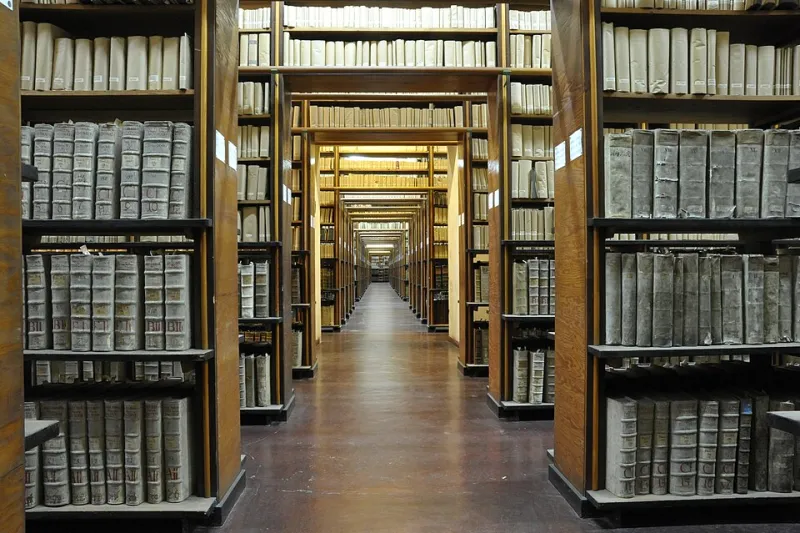
Photo: GualdimG, CC BY-SA 4.0, via Wikimedia Commons
When a doctoral candidate at a major research university sets out to study the literary culture of early modern Moldavia, or the philosophical pamphlets circulated among nineteenth-century Galician intelligentsia, she will almost certainly encounter the same obstacle: the materials she needs do not exist in any library within a thousand miles. She may find a handful of microfilm reels, a digitized catalog entry that leads nowhere, or a brief note in a finding aid indicating that the collection in question was "partially transferred" to an institution overseas at some unspecified date. What she will rarely find is the primary source itself.
This is not an anomaly. It is the norm.
American university libraries have made extraordinary investments in Eastern European holdings over the past several decades, driven in part by Cold War-era area studies programs and, more recently, by digitization initiatives funded through federal and private grants. Yet for every celebrated acquisition — a trove of Polish incunabula here, a collection of Czech samizdat there — entire regions, languages, and cultural traditions remain systematically underrepresented. Understanding why requires looking beyond the library catalog and into the geopolitical and economic structures that have shaped scholarly exchange between the United States and Eastern Europe for well over a century.
The Geography of Omission
Not all Eastern European nations have been equally visible to American academic institutions. Collections from Poland, the Czech Republic, and to a lesser extent Hungary have benefited from relatively robust bilateral scholarly relationships, diaspora advocacy, and the institutional legacies of Cold War-era exchange programs. By contrast, materials originating from Belarus, Moldova, Subcarpathian Ruthenia, and the non-Russian Soviet successor states have arrived in American collections sporadically, if at all.
The reasons are multiple and overlapping. Diaspora communities in the United States have historically played a decisive role in prompting universities to acquire materials from their ancestral homelands — a dynamic that has worked well for communities with sufficient size, organization, and proximity to major research institutions. Smaller or more dispersed communities, including Rusyns, Sorbs, and Vlachs, have lacked the institutional leverage to advocate successfully for acquisitions that would serve their heritage traditions.
Beyond diaspora politics, the economics of acquisition have consistently disadvantaged smaller national collections. Rare book dealers and archival brokers operating in Central and Western Europe have well-established channels for placing materials with American buyers. Equivalent networks in the post-Soviet periphery are far less developed, meaning that even when significant collections become available — through estate dispersals, institutional deaccessioning, or the gradual privatization of formerly state-held archives — American universities are rarely positioned to respond in time.
The Languages Left on the Shelf
Language itself functions as a structural barrier. American Slavic studies programs have historically centered Russian, Polish, and Czech as their primary instructional languages, with Serbian, Croatian, and Bulgarian occupying a secondary tier. Languages such as Rusyn, Kashubian, Silesian, and Aromanian — each with its own documentary and literary traditions — have rarely been taught at the graduate level in the United States, which means that even when materials in these languages arrive in a university collection, there may be no faculty member capable of cataloging them accurately, let alone teaching from them.
This creates a feedback loop that is difficult to interrupt. Without trained readers, collections are not acquired. Without collections, there is no incentive to train readers. Several institutions have attempted to break this cycle through collaborative cataloging projects with partner universities in Europe, but such efforts remain underfunded and geographically limited in scope.
Archival Displacement and Its Consequences
The twentieth century imposed its own particular distortions on the availability of Eastern European materials. The upheavals of two world wars, followed by four decades of Soviet-era cultural policy, scattered archival collections across multiple continents and jurisdictions. Libraries were evacuated, seized, burned, or simply lost in the administrative chaos of shifting borders. Materials that survived often ended up in locations that bear no obvious relationship to their origins: Ukrainian manuscripts in Vienna, Belarusian periodicals in Chicago, Lithuanian ecclesiastical records in Rome.
For American scholars, this dispersal presents both an obstacle and an opportunity. The obstacle is obvious: reconstructing a coherent picture of any given regional literary or intellectual tradition requires navigating archives on at least three continents, often in languages for which finding aids have never been translated. The opportunity is less frequently acknowledged — namely, that American universities, precisely because they are outside the jurisdictions that have contested ownership of these materials for generations, are sometimes uniquely positioned to serve as neutral custodians.
Several institutions have begun to act on this logic. The University of Illinois at Urbana-Champaign, long a leader in Slavic acquisitions, has in recent years expanded its focus toward underrepresented regional collections. The Library of Congress Overseas Offices program maintains acquisition pipelines in several Eastern European capitals. Yet these efforts, commendable as they are, remain concentrated among a small number of elite institutions, leaving the vast majority of American universities without meaningful access to the materials their students increasingly need.
A Roadmap for Scholars and Librarians
Addressing these gaps will require coordinated action across several fronts. At the institutional level, universities should consider funding dedicated liaisons for underrepresented Eastern European collections — specialists with both the linguistic competence and the regional network to identify acquisition opportunities before they disappear. Several European models, including the collaborative acquisition consortia operating among German research libraries, offer instructive precedents.
At the national level, federal granting agencies including the National Endowment for the Humanities and the Institute of Museum and Library Services should be encouraged to prioritize digitization partnerships with archival institutions in Belarus, Moldova, Ukraine, and the South Caucasus — regions where collections remain both highly significant and highly vulnerable. The recent precedent set by emergency digitization efforts in response to the ongoing conflict in Ukraine demonstrates that rapid, targeted intervention is possible when institutional will exists.
Finally, scholars themselves bear a responsibility to document what is missing. Systematic gap analyses — rigorous assessments of which authors, movements, languages, and periods are absent from American holdings — would provide librarians with the evidence base they need to justify acquisition budgets to administrators who may not otherwise appreciate the stakes.
The hidden libraries of Eastern Europe are not, in most cases, hidden by intention. They are hidden by inertia, by underfunding, and by the accumulated weight of historical neglect. Correcting that neglect is neither simple nor inexpensive. But for a scholarly community that takes seriously its obligation to the full breadth of human intellectual heritage, it is work that cannot be deferred indefinitely.