Shelved and Forgotten: The Quiet Crisis of Eastern European Rare Books in American Research Libraries

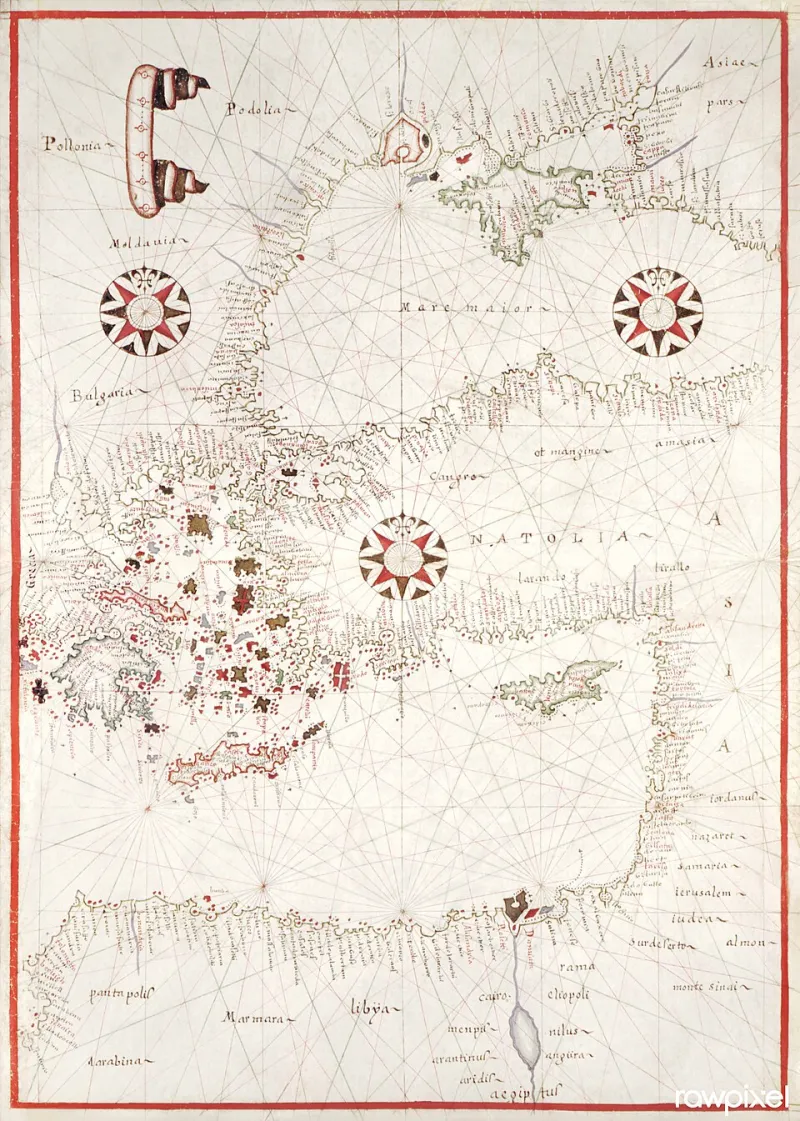
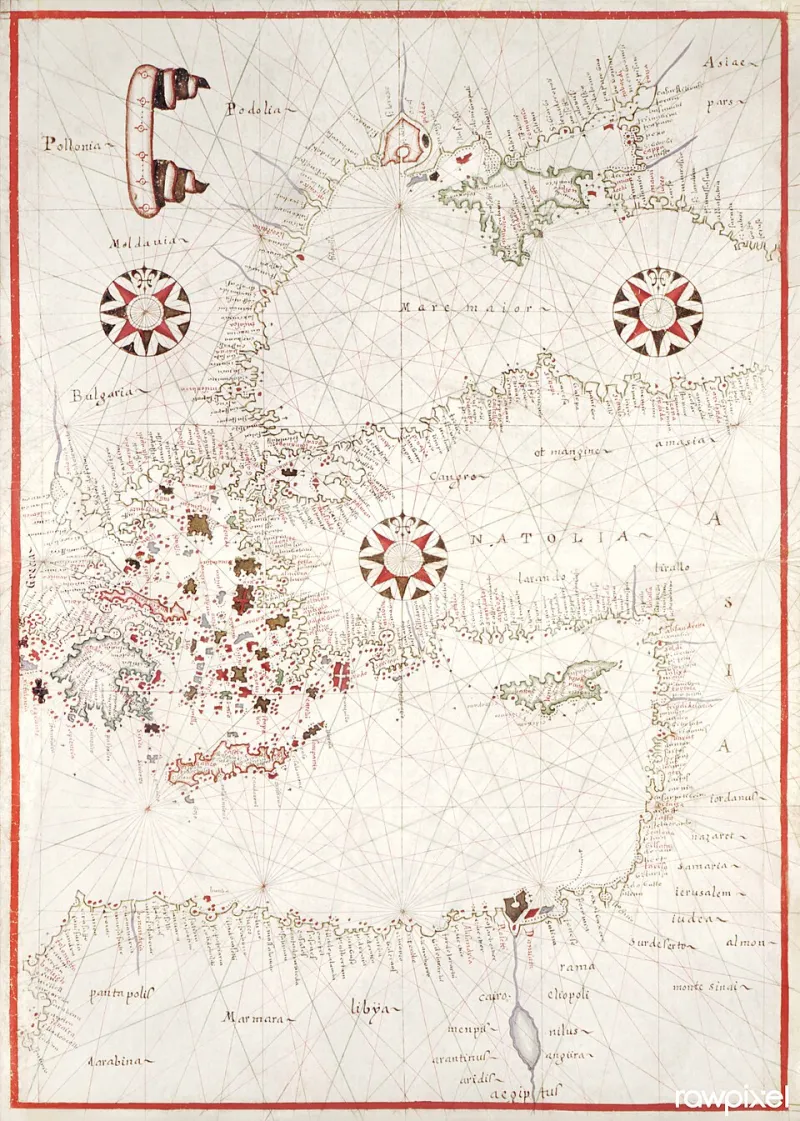
Photo: सुबोध कुलकर्णी, CC BY-SA 4.0, via Wikimedia Commons
In the climate-controlled vaults of several prominent American research universities, items of extraordinary historical significance sit in archival boxes with handwritten labels, their contents described in catalog records so sparse as to be nearly useless. A sixteenth-century Cyrillic liturgical text cataloged simply as "Slavic religious manuscript, origin unknown." A collection of early printed books from Kraków or Lviv assigned a single subject heading—"Eastern Europe"—and left, effectively, at the bottom of a very long list. These are not hypothetical examples. They are the lived reality of Eastern European rare book stewardship in the United States, and scholars who work in this field have grown increasingly vocal about what they describe as an institutional failure hiding in plain sight.
The problem is not a shortage of holdings. American research libraries, particularly those at institutions with strong Slavic studies programs, accumulated substantial Eastern European collections throughout the twentieth century. Cold War-era funding, émigré donations, and opportunistic acquisitions during periods of European instability all contributed to holdings that, on paper, appear impressive. The difficulty lies in what happened—or failed to happen—after acquisition.
A Catalog Record Is Not a Research Resource
Margaret Holloway, a rare books librarian at a large midwestern research university who asked that her institution not be identified by name, has spent the better part of a decade attempting to bring order to a Slavic collection that arrived largely undescribed. "We have items that were donated in the 1960s and 1970s with almost no provenance documentation," she explained in a recent interview. "The original catalogers did their best, but Cyrillic materials were simply not a priority. You end up with records that tell a researcher almost nothing useful—no collation, no physical description worth speaking of, sometimes not even an accurate century of origin."
The consequences of inadequate cataloging extend well beyond inconvenience. When a manuscript or early printed book cannot be found through standard discovery systems, it does not exist for most researchers. Scholars working on Eastern European history, linguistics, or religious culture—particularly those based at institutions without dedicated Slavic librarians—have no reliable mechanism to learn that a relevant item exists at an institution three states away. The practical effect is that significant primary sources remain functionally invisible to the scholarly community.
Dr. Taras Bilyk, a historian of early modern Eastern Europe currently affiliated with a university in the mid-Atlantic region, describes the experience of archival research in this field as one of perpetual improvisation. "You find things by accident, or because someone who has been working in this area for thirty years happens to mention it over coffee at a conference," he said. "That is not how scholarship should work. It is certainly not how Western European rare book collections are managed."
The Western European Benchmark
That comparison to Western European holdings is one that recurs throughout conversations with specialists in this area, and it is not made casually. American research libraries have, over generations, invested heavily in the cataloging, conservation, and digitization of materials from France, England, Germany, and Italy. Incunabula from Venice or Paris are cataloged to a standard that allows granular bibliographic research. Conservation resources are allocated with regularity. Digitization projects are funded, completed, and made accessible through platforms that scholars worldwide can use.
The disparity is not difficult to document. A review of major digital library initiatives reveals that Eastern European imprints—particularly those in Cyrillic scripts, or in languages such as Church Slavonic, Ukrainian, Belarusian, or Polish—are represented at a fraction of the rate of comparable Western European materials. Institutions that have digitized thousands of Latin manuscripts may have digitized dozens of Slavic ones, if that.
Conservators working in this space point to a related problem: deferred maintenance. Anastasia Kovalenko, a conservation specialist with experience at several American institutions, notes that Eastern European materials frequently arrive in collections already compromised by poor storage conditions in their countries of origin, only to encounter further neglect once acquired. "There is a triage problem," she said. "When conservation budgets are limited—and they are always limited—items that are better understood, better cataloged, and more frequently requested tend to receive attention first. Materials that are poorly described and rarely requested fall to the bottom of the queue. It becomes a self-reinforcing cycle."
Structural Causes and Institutional Inertia
Understanding why this situation persists requires looking beyond individual institutions to structural conditions in American academic librarianship. The pipeline of trained Slavic catalogers has narrowed considerably over the past several decades. Graduate programs in library science produce relatively few specialists with the linguistic competencies required to catalog materials in Church Slavonic, Old Ukrainian, or early modern Polish. Institutions that lose a specialist through retirement or departure frequently struggle to replace that expertise, and cataloging projects stall or are handled by generalists working beyond their training.
Funding structures compound the difficulty. Digitization and cataloging grants from federal sources such as the National Endowment for the Humanities have supported important projects in this area, but competition is intense and Eastern European collections have not always been positioned to compete effectively. Grant applications require preliminary descriptive work—the very work that has not been done—creating a paradox in which the most neglected collections are also the least fundable.
Institutional prestige dynamics play a role as well. Rare book curators and library administrators operate within systems that reward high-profile acquisitions and visible programming. A newly acquired medieval illuminated manuscript from a Western European tradition generates donor interest and press coverage in ways that a collection of seventeenth-century Ruthenian printed books, however significant, typically does not.
Paths Toward Remediation
Specialists in this field are not without proposals. Several concrete interventions emerge consistently from conversations with librarians, conservators, and scholars.
First, consortium-based cataloging projects modeled on successful cooperative initiatives in other areas of special collections could allow institutions to pool expertise and divide labor. A coordinated national effort to produce minimal-level catalog records for Eastern European holdings—even before full descriptive cataloging is possible—would significantly improve discoverability.
Second, partnerships with Eastern European academic institutions and national libraries offer a largely untapped resource. Scholars in Poland, Ukraine, Lithuania, and the Czech Republic have deep expertise in the bibliographic traditions of their regions and, in many cases, strong interest in collaborating with American counterparts. Such partnerships could accelerate both cataloging and conservation work while building lasting scholarly relationships.
Third, digitization must be treated as a preservation priority rather than a supplemental activity. For materials in fragile condition, digital access reduces physical handling and extends the useful life of originals. Several institutions have demonstrated that targeted digitization of Eastern European holdings, even at modest scale, generates measurable increases in scholarly use and citation.
Finally, professional organizations in American academic librarianship must treat the training gap in Slavic cataloging as a genuine crisis requiring a coordinated response. Fellowships, mentorship programs, and revised curricula in library science programs could begin to rebuild a professional pipeline that has been allowed to thin for too long.
The Stakes of Continued Neglect
The materials at issue are not peripheral curiosities. Early Eastern European printed books and manuscripts document the formation of literary languages, the transmission of Orthodox theological thought, the development of legal and administrative traditions, and the cultural life of communities whose histories remain underrepresented in mainstream American scholarship. The Ostrog Bible of 1581, to take one prominent example, is recognized by specialists as a landmark of Slavic civilization—yet materials from the same intellectual tradition, produced in the same era, sit in American library vaults in conditions that would be considered unacceptable for comparable Western European items.
The scholars and librarians who work in this field speak with a mixture of frustration and determination. They are not, by and large, given to hyperbole. But when asked what is at stake if current conditions persist, their answers are consistent: irreplaceable historical evidence, already fragile, will continue to deteriorate; scholarly understanding of Eastern European history will remain incomplete; and American research institutions will have failed in a fundamental stewardship responsibility. That is a quiet crisis, but it is a genuine one—and it is not beyond remedy.