Fragmented by Design: The Institutional Gridlock Preventing a Unified Digital Future for Eastern European Collections
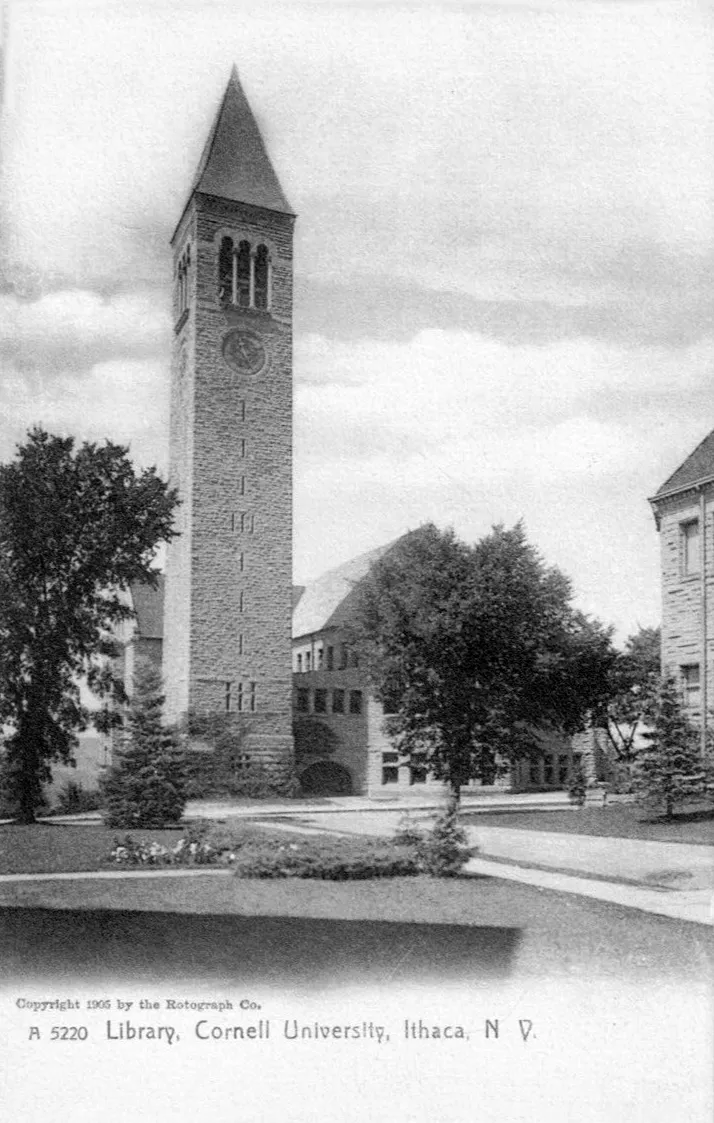
Photo: Rotograph Co., Public domain, via Wikimedia Commons
Somewhere in the basement of a major American research library, a hard drive containing digitized Galician parish records sits in a format that three different software systems can no longer reliably read. The files were created in good faith, with grant money and genuine scholarly ambition, roughly fifteen years ago. Today, they occupy a peculiar limbo: technically preserved, practically inaccessible, and increasingly invisible to the researchers who need them most.
This scenario is neither hypothetical nor rare. Across the United States, institutions that have invested substantially in digitizing Eastern European materials are confronting an uncomfortable truth: digitization is not the same as preservation, and the absence of shared standards has turned a generation of well-intentioned projects into a patchwork of incompatible silos.
A Problem Without a Single Owner
The difficulty begins with institutional structure. American research universities do not operate as a coordinated network when it comes to special collections. Each library administers its own acquisitions, selects its own software platforms, and applies its own metadata schemas to cataloged materials. For collections of Western European provenance, decades of collaborative infrastructure—shared cataloging agreements, consortium-level storage solutions, interoperable discovery systems—have smoothed many of these edges. Eastern European collections have not benefited from equivalent investment.
"The Slavic materials were always the afterthought," said one senior cataloger at a large Midwestern research university, speaking on condition of anonymity because of ongoing institutional negotiations. "When the digitization funding came in the 1990s and early 2000s, the priority queues were set by donor interest and faculty demand. Eastern European collections consistently ranked lower, and by the time serious attention arrived, everyone was already using different systems."
The result is a landscape that specialists describe as balkanized in the most literal sense: fragmented along institutional lines, with each repository operating under its own logic and limited appetite for external coordination.
The Metadata Fault Line
At the technical core of the dispute lies the question of metadata—the structured descriptive information that makes digitized objects discoverable, interpretable, and linkable across platforms. For Eastern European materials, this is not a trivial concern. Collections routinely span multiple languages, scripts, and political geographies. A single manuscript may have been produced in what is now western Ukraine, cataloged under Austro-Hungarian administrative terminology, acquired by an American library under a Soviet-era classification system, and described using transliteration conventions that have since been revised or abandoned.
Three competing metadata frameworks currently claim relevance to this domain. The Library of Congress's MARC-based systems remain dominant in legacy catalogs but are widely regarded as inadequate for the granular description that complex multilingual materials require. Dublin Core offers greater flexibility but sacrifices precision. Linked Open Data approaches, championed by a growing contingent of digital humanities scholars, promise interoperability across institutions but demand technical infrastructure and staff expertise that most libraries cannot currently sustain.
No single framework has achieved consensus, and the absence of consensus has practical consequences. When a researcher at Columbia attempts to locate Ruthenian-language periodicals that may be held at the University of Illinois, the discovery process depends on whether both institutions have applied compatible subject headings, consistent transliteration standards, and mutually legible date formats. Often, they have not.
Funding Structures That Reward Novelty Over Continuity
Underpinning the technical fragmentation is a funding environment that structurally disincentivizes long-term coordination. Federal granting agencies, including the National Endowment for the Humanities and the Institute of Museum and Library Services, have historically prioritized discrete project-based awards over sustained infrastructure investment. A proposal to digitize a newly acquired collection of interwar Polish-language newspapers in Chicago competes favorably for funding. A proposal to migrate a fifteen-year-old digitized collection from an obsolete format to a current preservation standard does not generate equivalent enthusiasm.
"Migration work is invisible work," observed a digital preservation librarian at a research university in the Northeast who has spent the better part of a decade advocating for format-migration funding. "There's no ribbon-cutting moment, no new discovery to announce. You're simply keeping existing material alive, and the funding apparatus doesn't know how to reward that."
The consequences compound over time. Format obsolescence is not a distant theoretical threat; it is an ongoing process. File formats that were standard practice in 2005 are already presenting access challenges. Without sustained migration investment, materials digitized during the first wave of library digitization initiatives face a trajectory toward effective inaccessibility—preserved in name, lost in practice.
Stakeholders at an Impasse
The scholarly community has not been passive in the face of these challenges, but its interventions have been constrained by the same institutional fragmentation they seek to address. Several consortium-level initiatives have attempted to establish shared infrastructure for Eastern European digital collections. The Digital Library of Eastern Europe, a long-discussed but never fully realized project, has existed in various proposal stages for over a decade without achieving the institutional buy-in necessary for implementation.
Librarians point to faculty governance structures as a complicating factor. Decisions about collection priorities and technical standards require faculty input, but Slavic studies departments at most American universities are small, often understaffed, and rarely positioned to exercise sustained influence over library technology decisions. Technologists, meanwhile, frequently lack the disciplinary knowledge to appreciate the specific challenges that Cyrillic scripts, historical orthographies, and multilingual archival structures present to standard cataloging workflows.
The result is a negotiation that never quite concludes, conducted across institutional boundaries by parties with different vocabularies, different incentive structures, and different definitions of what preservation actually means.
What Standardization Would Require
Scholars who have studied comparable coordination challenges in other archival domains suggest that progress requires a combination of mandated interoperability standards, sustained multi-year funding commitments, and the designation of lead institutions with genuine authority to set shared protocols. None of these conditions currently exists for Eastern European digital collections in the United States.
Some observers point to the Digital Preservation Coalition, a UK-based organization that has developed widely adopted frameworks for long-term digital stewardship, as a model worth adapting for the American context. Others argue that the scale and complexity of Eastern European holdings across U.S. institutions demands a specifically designed domestic solution, potentially anchored by the Library of Congress or a consortium of major research universities.
What is not in dispute is the urgency. Every year without standardization is a year during which format obsolescence advances, institutional memory turns over, and the window for retroactive coordination narrows. The materials at stake—manuscripts, periodicals, parish records, administrative documents, literary archives—represent cultural heritage that survived wars, occupations, and deliberate destruction. Whether they survive the quieter threat of institutional inertia remains an open and genuinely consequential question.
For American research universities that have long positioned themselves as global stewards of endangered knowledge, the answer they give will say something important about the limits of that commitment.