Voices from the Margins: How Eastern European Linguists Quietly Rewrote the Rules of Modern Language Science
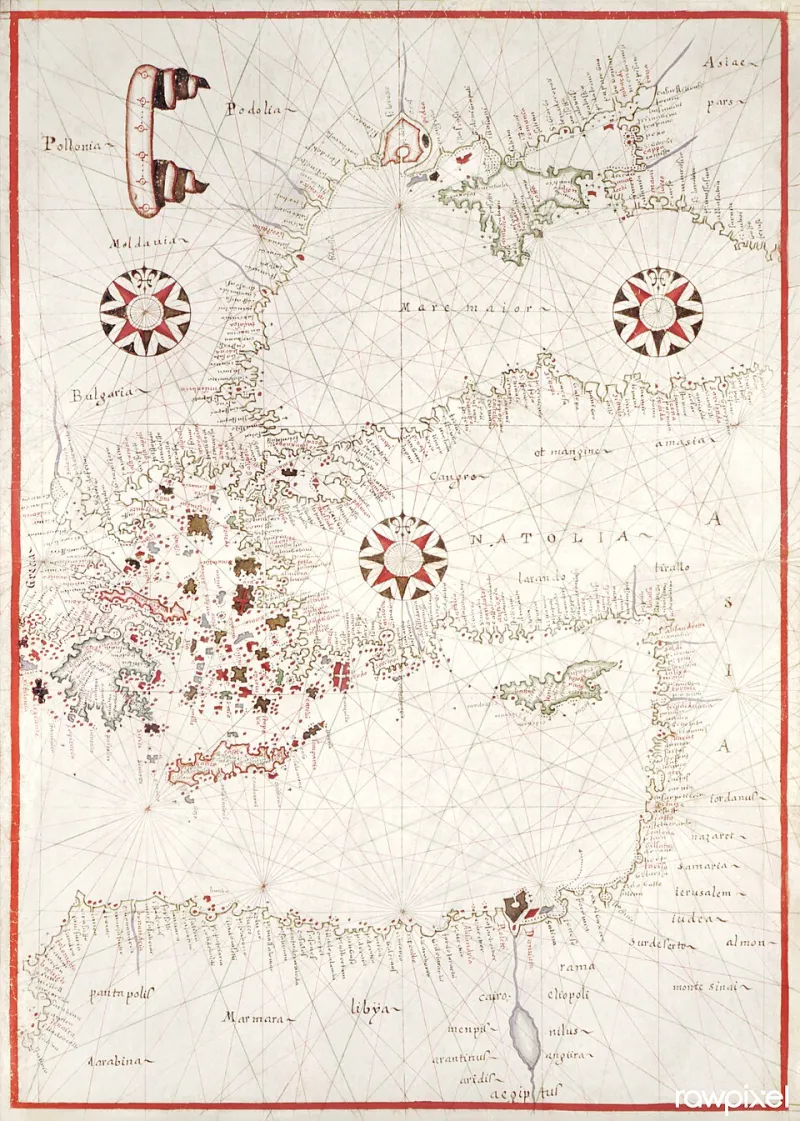
Photo: Rawpixel Ltd, CC BY 2.0, via Wikimedia Commons
In the standard American university survey of twentieth-century linguistics, a handful of names recur with near-liturgical consistency: Saussure, Bloomfield, Chomsky. The intellectual genealogy presented to undergraduates is tidy, largely Western European and North American in its geography, and organized around a sequence of paradigm shifts that appears almost self-contained. What that genealogy omits—sometimes through ignorance, sometimes through institutional inertia, and sometimes through the distorting pressures of Cold War academic politics—is a parallel tradition of extraordinary depth and rigor that flourished in Prague, Warsaw, Kyiv, and Kazan long before many of its credited Western counterparts arrived at similar conclusions.
The recovery of that tradition is now, belatedly, underway.
The Prague School and the Problem of Credit
Among specialists, the Prague Linguistic Circle requires no introduction. Founded in 1926 and animated by figures including Nikolai Trubetzkoy, Roman Jakobson, and Vilém Mathesius, the Circle produced some of the most consequential phonological theory of the twentieth century. Trubetzkoy's Principles of Phonology, published posthumously in 1939, established the conceptual framework for distinctive feature theory decades before it entered mainstream American linguistics through the work of scholars who had absorbed—and not always fully acknowledged—its premises.
Yet even within this relatively well-documented case, the full Eastern European dimension is frequently compressed. Jakobson, who emigrated to the United States and spent his later career at Harvard and MIT, became the face of structuralist linguistics in American academia. His colleagues who remained in Central and Eastern Europe, or who perished during the Second World War, received far less attention. Trubetzkoy himself, an émigré of Russian aristocratic origin who died in Vienna in 1938 following a Gestapo interrogation, is cited in footnotes but rarely accorded the sustained biographical and intellectual attention his work merits in American syllabi.
The Kazan School: A Prior Claim
The story reaches back further still. The Kazan Linguistic School, active in the late nineteenth and early twentieth centuries under the leadership of Jan Baudouin de Courtenay, anticipated several structural insights that would later be attributed to Saussure and his successors. Baudouin de Courtenay, a Polish scholar who worked across the Russian Empire, introduced the concept of the phoneme in terms strikingly close to those that would later define European structuralism. His student Mikołaj Kruszewski developed related ideas with comparable sophistication.
Both men published primarily in Russian and Polish. Their work reached Western European scholars unevenly and belatedly. By the time structural linguistics crystallized into a recognized school of thought in the West, the Kazan contributions had been partially absorbed, partially forgotten, and almost entirely uncredited in the English-language literature that shaped American graduate training throughout the mid-twentieth century.
This is not a minor bibliographic oversight. It represents a systematic distortion of intellectual history—one with consequences for how American students understand the origins of the field they are entering.
Cold War Silences and Institutional Barriers
The political geography of the Cold War compounded older patterns of neglect. After 1945, Eastern European scholars working within Soviet-aligned academic systems faced significant obstacles to international circulation of their research. Journals published in Warsaw or Kyiv were not reliably acquired by American university libraries. Scholars who wished to attend international conferences required permissions that were not always granted. Correspondence with Western colleagues carried political risk.
On the American side, institutional incentives pointed in the opposite direction. Federal funding priorities, shaped by Cold War competition, favored applied linguistics and area studies programs oriented toward strategic languages rather than theoretical work emerging from behind the Iron Curtain. The result was a kind of double invisibility: Eastern European linguists were producing serious scholarship that American institutions lacked both the infrastructure and the inclination to engage.
There were exceptions. Certain émigré scholars—like Jakobson himself, or the Ukrainian-born George Shevelov, who spent decades at Columbia University producing monumental studies of the Ukrainian and Slavic languages—managed to bridge the divide. But they did so as individuals, often working at the margins of departments whose primary interests lay elsewhere, and their success did not translate into sustained institutional attention to the broader tradition from which they came.
The Work of Rediscovery
Contemporary Slavic studies programs at American universities are increasingly engaged in the work of recovery. Scholars at institutions including the University of Illinois, UCLA, and Harvard's Department of Slavic Languages and Literatures have in recent years produced critical editions, biographical studies, and theoretical reassessments that restore Eastern European linguists to a more accurate position in the history of the discipline.
Digital humanities initiatives have played an important supporting role. The digitization of Eastern European scholarly journals—many of which were never microfilmed and survived only in fragile print runs held by a small number of research libraries—has made primary sources accessible to researchers who lack the institutional resources to travel to archives in Kraków, Lviv, or Vilnius. Projects affiliated with universities in Poland, Ukraine, and the Baltic states have increasingly sought American partners, recognizing that transatlantic collaboration accelerates both digitization and scholarly dissemination.
The theoretical stakes are not merely historical. Several areas of current linguistic inquiry—including work on prosody, language contact, and the phonological structures of understudied Slavic and Baltic languages—benefit directly from engagement with Eastern European scholarship that was bypassed during the Cold War decades. Researchers who have taken the time to work through this literature in the original languages frequently report finding ideas that complicate, enrich, or outright predate conclusions their field currently treats as recent innovations.
Toward a More Complete Intellectual History
The broader implication of this recovery project extends beyond any particular name or discovery. What the rehabilitation of Eastern European linguistics reveals is the degree to which the history of any intellectual discipline is shaped by the political and institutional conditions under which knowledge circulates—or fails to. The map of twentieth-century linguistics that American students inherit was drawn under specific historical pressures, and it omits significant terrain.
For scholars working in the tradition that New Ostrog represents—attentive to Eastern European intellectual heritage and committed to its serious examination—this is familiar territory. The pattern of marginalization and belated recovery that characterizes the linguistic case echoes across fields: history, philosophy, literary theory, musicology. In each domain, the work of restoration requires not only archival diligence but a willingness to interrogate the assumptions built into the canonical accounts we have inherited.
The linguists who developed phonological theory in Kazan, who debated the structure of Slavic verb aspect in Warsaw seminar rooms, who mapped the sound systems of minority languages in the Carpathians—they were not working in isolation from the main currents of their discipline. They were, in many cases, ahead of those currents. Restoring their place in the record is not an act of regional advocacy. It is an act of intellectual honesty.