Exiled Minds, Enduring Ideas: How Eastern European Émigré Scholars Transformed American Academic Life
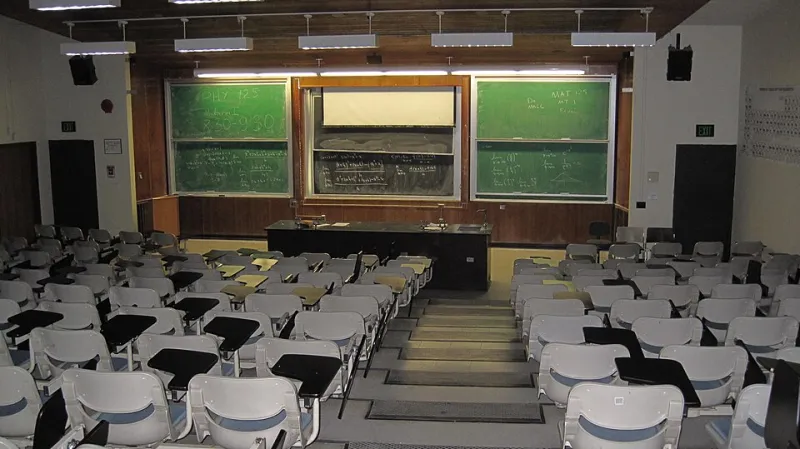
Photo: Josephng1, CC BY-SA 3.0, via Wikimedia Commons
In the autumn of 1941, Roman Jakobson stepped off a ship in New York Harbor carrying little more than a suitcase and a theoretical framework that would eventually upend American linguistics. He had escaped Nazi-occupied Europe via a circuitous route through Scandinavia, and within a decade he would be teaching at Harvard, reshaping how the English-speaking world understood the very structure of human language. Jakobson was not alone. He was part of a vast, largely unheralded migration of Eastern European intellect—one that arrived in waves across the mid-twentieth century and quietly rewrote the curricula of American universities from within.
This article examines that migration not merely as a biographical curiosity but as a structural event in American intellectual history. The scholars who came from Poland, Czechoslovakia, Hungary, Ukraine, and the broader Eastern European sphere did not simply assimilate into existing American academic traditions. They challenged those traditions, expanded them, and in many cases rendered them unrecognizable compared to what had existed before.
A Different Kind of Scholarly Formation
To understand what these scholars brought with them, one must first appreciate what Eastern European academic culture looked like before the catastrophes of the twentieth century. Universities in Prague, Warsaw, Lviv, and Kraków had developed rigorous philological and philosophical traditions rooted in centuries of multilingual, multiconfessional intellectual life. Scholars trained in these environments were accustomed to working across linguistic boundaries—reading texts in Latin, Church Slavonic, German, and vernacular languages simultaneously—and to treating cultural artifacts as embedded within complex historical and political contexts.
American academic culture in the early twentieth century, by contrast, was largely shaped by Anglo-German models that emphasized empirical research and disciplinary specialization. The arrival of Eastern European scholars introduced a corrective: a tradition of structural thinking, historical depth, and theoretical ambition that American departments had not previously cultivated at scale.
Jakobson's influence on linguistics is perhaps the most documented example. His work on phonology, his concept of distinctive features, and his later contributions to semiotics gave American linguists a theoretical vocabulary they had lacked. His collaboration with Claude Lévi-Strauss at the New School for Social Research in New York during the 1940s directly seeded what would become structuralism—a movement that reshaped anthropology, literary criticism, and philosophy across the Western world.
Philosophy and the Political Imagination
Beyond linguistics, Eastern European émigré scholars made decisive interventions in political philosophy and social theory. Hannah Arendt, born in Germany but deeply formed by Central European intellectual culture, produced The Origins of Totalitarianism in 1951—a work that drew on her direct experience of statelessness and persecution to theorize political violence in ways that American scholars, insulated by geography from twentieth-century catastrophe, could not have generated independently.
Similarly, figures such as the Polish-born sociologist Florian Znaniecki, who had already published The Polish Peasant in Europe and America with W. I. Thomas before the Second World War, introduced American sociology to methodologies that took subjective human experience seriously as data. His concept of the humanistic coefficient—the idea that social phenomena must be understood from the perspective of those who experience them—anticipated interpretive sociology by decades.
Less celebrated but equally significant were the contributions of Ukrainian and Czech scholars who found positions at American research universities during the Cold War. Historians trained in the traditions of the Annales-adjacent Eastern European schools brought a preoccupation with long-term structural change and everyday material life that enriched American historiography considerably.
Suppression as Intellectual Pressure
There is a paradox worth dwelling on: many of the ideas these scholars carried to American shores had been actively suppressed in their countries of origin. Soviet cultural policy, Stalinist anti-cosmopolitanism, and the intellectual conformity demanded by communist party structures meant that entire fields of inquiry—structural linguistics, comparative mythology, phenomenological philosophy—were effectively banned or severely constrained across Eastern Europe for decades.
This suppression had an unexpected consequence. When scholars working in these traditions emigrated, they arrived in American institutions with a heightened awareness of what was at stake in intellectual freedom. They were not abstract champions of academic liberty; they were people who had watched colleagues imprisoned for theoretical positions. This urgency translated into a particular intensity of scholarly commitment that marked their American careers and influenced generations of students.
At institutions such as Columbia, Harvard, Yale, Indiana University, and the University of Chicago, émigré scholars established programs, edited journals, and trained doctoral students who went on to define entire subfields. The Slavic departments that flourished at major American research universities during the Cold War era were in many cases intellectual ecosystems constructed around the theoretical frameworks these scholars had imported.
The Curriculum as Living Archive
What does this legacy look like in contemporary American universities? In some respects, it has been so thoroughly absorbed that its Eastern European origins are no longer visible. Students in linguistics courses learn phonological theory without knowing that its foundational concepts were developed by a Czech-educated Russian scholar in wartime New York. Students in political science read about totalitarianism without encountering the specific biographical context that shaped the theorist's analytical choices.
This invisibility is partly a mark of success—ideas that have been fully integrated into a discipline no longer require attribution to their geographical origins. But it also represents a form of institutional forgetting that deserves scrutiny. When the Eastern European provenance of foundational ideas is erased from the curriculum, students lose access to a fuller understanding of how knowledge is produced, under what conditions, and at what human cost.
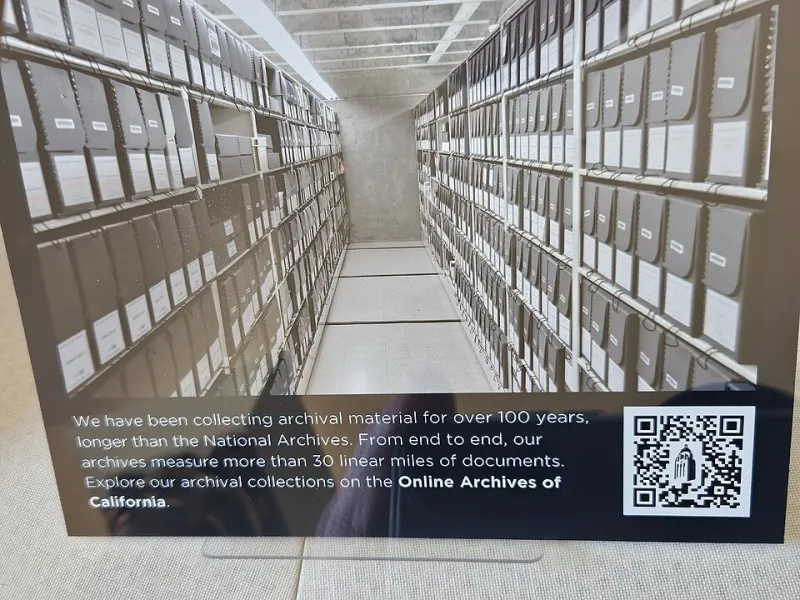
Several American universities have begun to address this gap. Programs in Slavic studies, Central European history, and comparative literature have increasingly incorporated reflexive scholarship that examines the émigré intellectual tradition itself as a subject of inquiry. Digital humanities projects are recovering correspondence, unpublished manuscripts, and institutional records that document these scholars' contributions in granular detail.
Toward a Fuller Accounting
The intellectual migration of Eastern European scholars to American universities represents one of the most consequential, and least publicly acknowledged, episodes in the history of American higher education. The frameworks through which American students learn to analyze language, interpret political violence, understand social structure, and read literary texts were shaped in significant measure by people who arrived in this country as refugees, displaced persons, or Cold War exiles.
Recovering that history is not merely an exercise in scholarly completeness. It is a reminder that the most durable intellectual contributions often emerge from the margins—from people who carried their traditions across borders because those traditions had been deemed dangerous at home. For American universities committed to genuine intellectual diversity, understanding this legacy is not optional. It is foundational.